
Can a Bank Report You Without Notice?
4/22/20264 min read
Understanding Bank Reporting Obligations
Financial institutions, including banks, operate within a framework of legal requirements that dictate their obligations to report customers to credit bureaus and various government agencies. These obligations are essential in maintaining the integrity of the financial system and facilitating the management of risks associated with lending and credit. Reporting requirements typically stem from both federal and state regulations, which govern the conduct of banks to ensure transparency and accountability.
The types of financial behaviors that may trigger reporting include, but are not limited to, defaults on loans, repeated overdrafts, and suspicious transactions that could indicate fraud or money laundering. When a customer fails to uphold their financial responsibilities, such actions may lead banks to report the account to credit bureaus, which in turn affects the customer's credit score. The rationale behind these requirements is to protect financial institutions from losses while simultaneously providing crucial information to potential lenders about the creditworthiness of customers.
Banks adhere to established protocols when submitting reports, which involve thorough documentation and adherence to privacy laws. This is important for ensuring that any reporting is done ethically and legally. Financial institutions must consider the Fair Debt Collection Practices Act (FDCPA) and the Fair Credit Reporting Act (FCRA), both of which establish strict guidelines that govern how and when reporting must occur. Noncompliance can have significant implications for both the bank and the individual customer.
Furthermore, the need for accurate reporting is paramount, necessitating that banks conduct regular training of their staff to ensure adherence to these legal compliance norms. By doing so, banks not only safeguard their interests but also contribute to a more reliable credit reporting system for consumers.
Circumstances Under Which Banks Report Customers
Banks may report customers under several circumstances, often without prior notice, to uphold regulatory standards and manage financial risks. One significant situation is when a customer defaults on a loan. In such cases, banks may initiate reporting to credit bureaus, impacting the customer's credit score and future borrowing capacity. A default signifies the inability or failure to meet financial obligations, prompting banks to take necessary action to mitigate their potential losses.
Additionally, when accounts are sent to collections, banks typically report this to credit agencies, which can again adversely affect the customer’s credit report. Collection agencies often become involved when debts are overdue, and failure to rectify this can lead to significant negative repercussions for the debtor in the form of lowered credit ratings and increased difficulty in securing future loans.
Another scenario is the suspicion of fraud, where banks have a responsibility to report unusual or potentially illegal activities associated with an account. This could involve discrepancies in account activity that seem suspicious or not typical for the account holder. Reporting fraudulent activity is crucial not only for customer protection but also for maintaining the integrity of the financial system.
Moreover, unusual account activity, such as large transactions that do not align with a customer’s typical spending habits, can trigger a bank's obligation to report to the relevant authorities or regulatory bodies. Depending on the nature of the activities, banks may take varying reporting paths, including internal flagging or notifications to law enforcement, ensuring compliance with both internal policies and external regulations.
Customer Rights and Notification Procedures
When it comes to banking practices, it is essential for customers to be aware of their rights regarding reporting activities conducted by financial institutions. One significant aspect of these rights includes the requirement for banks to notify customers about any adverse actions that could impact their credit status. Under the Fair Credit Reporting Act (FCRA), consumers have the right to be informed if a negative report is filed, allowing them to understand the factors that may affect their creditworthiness.
Furthermore, customers are entitled to access their credit reports at least once a year from major credit reporting agencies. This enables individuals to monitor their credit status actively, ensuring they can detect inaccuracies or fraudulent activities. Each bank must also provide clear instructions on how customers can request their credit reports, fostering transparency in its operations.
If a customer believes that a report has been improperly filed, there are specific procedures available to address such issues. Customers can dispute inaccuracies with both the bank and the credit reporting agency involved. Upon receiving a dispute, the bank is obligated to conduct an investigation and respond promptly. It is crucial for customers to document their communications and keep records of all correspondences during the dispute process.
Moreover, banks have a responsibility to communicate transparently with their clients, particularly in matters regarding reporting practices. They should ensure that any changes in a customer’s credit status are communicated clearly and promptly. Effective communication fosters trust between the bank and its customers, allowing for an informed decision-making process regarding financial management. Protecting consumer rights in reporting processes is fundamental to maintaining the integrity of financial institutions.
What to Do If You Are Reported by a Bank
Upon discovering that your bank has reported you, it is critical to approach the situation systematically. First, obtain a copy of your credit report from the major credit reporting agencies, which are Experian, Equifax, and TransUnion. Regularly reviewing your credit report is essential for understanding how financial actions impact your creditworthiness. Look for any discrepancies or errors that may have led to the bank's report.
If you identify errors on your credit report, you can dispute these inaccuracies. The Fair Credit Reporting Act entitles you to dispute information that is incorrect or incomplete. Each credit reporting agency provides a formal process for filing disputes. Typically, you can submit these disputes online, by mail, or via phone. Be sure to include any relevant documentation that supports your case, and keep copies of all correspondence for your records.
In circumstances where accounts are in collections, it is advisable to contact the collection agency directly to understand the nature of the debt and explore options for resolution. Negotiating a payment plan or settling the debt for less than what is owed are potential strategies to alleviate the financial burden and improve your credit standing.
Additionally, maintain open communication with your bank. A proactive approach can sometimes yield positive results, particularly if you explain your situation and seek to rectify any misunderstandings. Ensure that you keep detailed notes of all your interactions, including dates, times, and the names of representatives spoken to.
In today’s financial environment, maintaining a good credit score is imperative for securing favorable loan terms and financial opportunities. Taking steps to manage your financial health actively, including rectifying inaccuracies and addressing collections, can contribute significantly to improving your credit profile.
Every month you wait is costing you real money in fees, missed bonuses, and denied opportunities.
Stop guessing and stop getting rejected — fix it the right way.
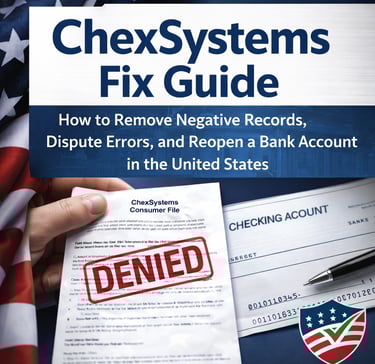
👉 Get the ChexSystems Fix Master Guide now and take back control.
Help
Guidance for fixing your chexsystems report.
Contact
infoebookusa@aol.com
© 2026. All rights reserved.