How to Fix an Unpaid Overdraft in ChexSystems
Blog post description.
3/5/20264 min read
How to Fix an Unpaid Overdraft in ChexSystems
A Complete, Practical U.S. Guide to Resolving Overdraft Reporting, Restoring Banking Access, and Avoiding Repeated Denials
If you’ve been denied a bank account and discovered an unpaid overdraft in your ChexSystems file, you’re likely asking:
“Do I have to pay it?”
“Will paying remove it?”
“Can I negotiate it?”
“How long will this block me?”
“Can I open an account somewhere else?”
An unpaid overdraft is one of the most common reasons Americans are denied checking accounts.
The good news:
It is usually fixable.
The bad news:
Fixing it incorrectly can delay your recovery for years.
This guide walks you through the exact, strategic steps to resolve an unpaid overdraft reported to ChexSystems — efficiently and legally.
No gimmicks.
No myths.
Just real-world U.S. banking strategy.
First: What Is ChexSystems?
ChexSystems is a nationwide consumer reporting agency that tracks deposit account activity.
It reports:
Unpaid overdrafts
Account closures for cause
Account abuse
Fraud indicators
Returned item patterns
When you apply for a new checking account, banks often review your ChexSystems file to assess deposit risk.
An unpaid overdraft is viewed as unresolved financial risk.
What Is an “Unpaid Overdraft” in ChexSystems?
An unpaid overdraft typically means:
Your account balance went negative
The bank covered transactions
You did not bring the balance back to $0
The bank closed the account
The negative balance was charged off
That amount — often including fees — is then reported to ChexSystems.
Example:
$180 overdraft
$210 in fees
Final balance owed: $390
That $390 may block you from opening new accounts.
Why Banks Care So Much About Unpaid Overdrafts
Banks see unpaid overdrafts as:
Loss history
Risk indicator
Pattern predictor
Operational cost
Even if the amount is small, the fact that it went unpaid signals potential future risk.
The dollar amount matters less than the behavior.
Step 1: Get the Exact Details Before Doing Anything
Request your consumer disclosure from:
ChexSystems
Review:
Reporting bank
Date reported
Amount owed
Closure reason
Any fraud or abuse notations
Do not assume the balance is accurate.
Verification comes first.
Step 2: Confirm the Balance Directly With the Bank
Before paying anything, contact:
The bank’s recovery department
Charge-off department
Collections unit
Ask:
What is the current balance?
Who owns the debt?
Has it been sold to a collection agency?
Is it still being reported?
Sometimes balances increase due to added fees.
Clarity prevents overpayment.
Step 3: Decide — Dispute or Negotiate?
There are two main paths:
Dispute (if inaccurate)
Negotiate (if accurate)
When to Dispute
Dispute if:
The balance amount is wrong
The account was identity theft
You paid already
The account isn’t yours
Dates are incorrect
Send written dispute with documentation.
If the bank cannot verify accuracy within investigation window, the entry must be deleted.
When to Negotiate
If the debt is accurate:
Negotiation is often the fastest path forward.
Step 4: Negotiate the Overdraft Strategically
You do not negotiate with ChexSystems.
You negotiate with the reporting bank (or collection agency).
Settlement Strategy
If you owe $600, you might offer:
$300–$400 lump sum
Older debts have stronger settlement leverage.
Always request:
Written confirmation of agreement
Clarification on reporting update
The Ideal Outcome: Pay-for-Delete
Best-case scenario:
You pay (full or partial)
The bank agrees to remove the ChexSystems entry entirely
Not all banks agree.
But some do — especially smaller institutions.
Never pay before written confirmation if deletion is part of the agreement.
What If the Bank Refuses to Delete?
If deletion is denied:
Options include:
Paying to update status to “Paid in Full”
Paying to update status to “Settled”
Waiting for 5-year aging
Even a paid status improves approval odds significantly.
How Long Does an Unpaid Overdraft Stay on ChexSystems?
Typically:
Up to 5 years from reporting date.
Unless:
Deleted after dispute
Removed through negotiation
Proven identity theft
Five years is maximum — not mandatory.
What Happens After You Pay?
Possible reporting outcomes:
Entry deleted
Updated to “Paid in Full”
Updated to “Settled”
No change (if poorly negotiated)
Deletion provides strongest impact.
Paid status still improves many approval decisions.
Step 5: Wait for Reporting Update Before Reapplying
After payment or deletion:
Request updated ChexSystems report
Confirm status change
Ensure identity data is correct
Do not apply immediately after payment without confirmation.
Automation may still show old status.
Step 6: Apply Strategically
Once resolved:
Start with:
Local credit unions
Regional banks
Digital banks with flexible screening
Avoid applying at multiple banks in one week.
Multiple inquiries increase risk flags.
If You Cannot Afford to Pay
Options include:
Payment plan
Partial settlement
Second-chance checking account
Waiting for aging off
Second-chance accounts may allow you to bank while resolving the balance.
Second-Chance Checking as a Bridge
Some institutions offer accounts for consumers with past overdrafts.
These typically:
Disable overdraft features
Require monthly fee
Limit check writing
Upgrade after responsible usage
This can provide temporary stability while you resolve ChexSystems reporting.
The Financial Cost of Ignoring an Unpaid Overdraft
If you remain unbanked, you may pay:
$8–$15 per paycheck to cash
$5–$10 per money order
Monthly prepaid card fees
ATM fees
Over 2–3 years, this often exceeds the original overdraft.
Resolving the balance is often financially smarter.
Common Mistakes That Make It Worse
Paying before negotiating deletion
Applying at multiple banks simultaneously
Ignoring identity errors
Sending emotional dispute letters
Not requesting updated report
Structure beats frustration.
Real-World Example
Consumer owed $475 from overdraft during job loss.
Account closed.
Reported to ChexSystems.
Two years later — still denied.
Negotiated $275 lump sum.
Bank updated status to “Paid.”
Approved at local credit union within 60 days.
Without negotiation, would have waited 3 more years.
When to Escalate
If inaccurate reporting continues, file complaint with:
Consumer Financial Protection Bureau
Regulatory complaints often trigger deeper review.
Use only when documentation supports your position.
Emotional Reality: Overdrafts Happen
Many unpaid overdrafts result from:
Job loss
Medical emergency
Divorce
Financial hardship
Banks view them as risk.
But they are common.
Recovery is possible.
The Smart Order of Operations
Pull ChexSystems report
Confirm accuracy
Dispute errors
Negotiate balance
Confirm update
Apply strategically
Manage new account perfectly
Skipping steps increases denial risk.
Don’t Let One Overdraft Control Five Years of Your Financial Life
An unpaid overdraft is serious — but it is manageable.
Handled correctly, many consumers resolve it in 30–60 days.
Handled incorrectly, it blocks banking for years.
Strategy determines speed.
Want the Exact Negotiation Scripts and Dispute Templates?
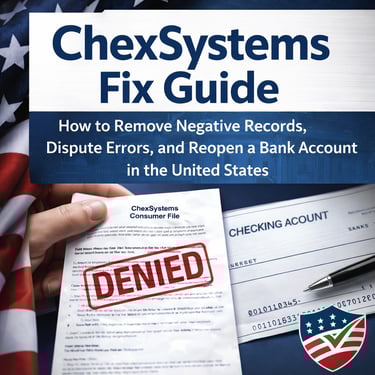
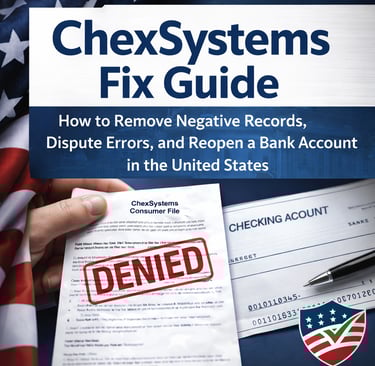
The ChexSystems Fix Guide includes:
Overdraft dispute templates
Pay-for-delete negotiation scripts
Settlement letter samples
Identity correction framework
Fraud flag clarification structure
Reapplication timing plan
Second-chance bank roadmap
Instead of guessing — and risking repeated denials —
You can follow a structured system designed specifically for U.S. consumers dealing with ChexSystems.
Every month without stable banking costs money.
If an unpaid overdraft is blocking your access — resolve it strategically.
Every month you wait is costing you real money in fees, missed bonuses, and denied opportunities.
Stop guessing and stop getting rejected — fix it the right way.
👉 Get the ChexSystems Fix Master Guide now and take back control.
Help
Guidance for fixing your chexsystems report.
Contact
infoebookusa@aol.com
© 2026. All rights reserved.