
Understanding the Distinction Between 'Paid' and 'Settled'
4/21/20262 min read
Introduction to Financial Terms
In the realm of finance and legal agreements, the terms "paid" and "settled" often arise, each carrying distinct meanings that are essential to understand. While they may seem interchangeable in casual conversations, their implications can greatly affect financial transactions, agreements, and one's credit history.
The Meaning of 'Paid'
The term "paid" refers specifically to the action of completing a payment. When an individual or entity pays an outstanding debt or obligation, it indicates that the due amount has been fully remitted. In the context of a loan, for example, if a borrower pays off the amount owed in its entirety, the loan is considered "paid off." This can reflect positively on a person’s credit report, showcasing their responsibility in fulfilling financial commitments.
The Concept of 'Settled'
Conversely, the term "settled" often includes an implication of negotiation or compromise. To settle a debt typically means that the amount paid is less than the full balance owed, yet the creditor accepts it as a full resolution of the debt. For example, if a debtor negotiates with a creditor and agrees to pay 70% of the overall debt instead of the full amount, the account may be marked as "settled." This can also have significant ramifications for credit scores and overall financial health, as it may not carry the same weight of responsibility as a fully paid account.
Key Differences Between 'Paid' and 'Settled'
Understanding the distinction between "paid" and "settled" is critical for financial literacy. When an obligation is marked as "paid," it indicates fulfillment in the eyes of the creditor, indicating that the debtor has met all terms of the agreement. However, when an obligation is marked as "settled," it may signal to potential creditors that there was a previous negotiation related to that debt, which can suggest risk. Therefore, while both terms denote an end to the obligation, they communicate different levels of financial responsibility.
Conclusion
In conclusion, knowing the difference between "paid" and "settled" is crucial for anyone navigating financial obligations. One represents complete fulfillment of a debt, while the other suggests negotiation and compromise. As individuals manage their financial health, clarity of these terms can influence credit scoring and future borrowing opportunities. Proper understanding of these terms reinforces the importance of maintaining accountability in financial commitments.
Every month you wait is costing you real money in fees, missed bonuses, and denied opportunities.
Stop guessing and stop getting rejected — fix it the right way.
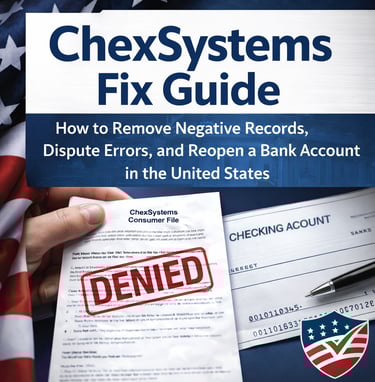
👉 Get the ChexSystems Fix Master Guide now and take back control.
Help
Guidance for fixing your chexsystems report.
Contact
infoebookusa@aol.com
© 2026. All rights reserved.