
What to Do If Your Bank Closed Your Account Without Warning
Blog post description.
3/18/20265 min read
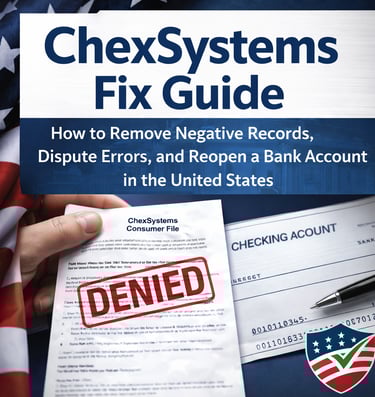
What to Do If Your Bank Closed Your Account Without Warning
A Practical, Step-by-Step U.S. Guide to Protecting Your Money, Reputation, and Banking Future
You log in.
Your balance won’t load.
Your debit card declines.
You call customer service and hear the words:
“Your account has been closed.”
No warning. No explanation. No time to prepare.
If this just happened to you, stop and breathe.
Bank account closures without warning are more common than people think — and how you respond in the first 72 hours can determine whether this becomes a temporary inconvenience… or a five-year financial setback.
This guide explains:
Why banks close accounts suddenly
What happens to your money
Whether you’ll be reported to ChexSystems
How this affects your ability to open new accounts
What to do step-by-step immediately
How to protect your long-term financial future
No fluff. No panic. Just practical strategy.
Why Banks Close Accounts Without Warning
Banks rarely close accounts randomly.
Even when it feels sudden, closures usually fall into one of these categories:
1. Risk Monitoring Flags
Banks use automated systems to detect:
Unusual deposits
Rapid movement of funds
Large cash activity
Suspicious transaction patterns
Frequent chargebacks
These systems are often tied to federal anti-money laundering laws and “Know Your Customer” rules.
If a system flags you, the bank may freeze and close first — investigate later.
2. Excessive Overdrafts
Repeated negative balances can trigger internal thresholds.
Even if you repay overdrafts, too many incidents may label the account as high risk.
3. Returned Deposits
Depositing checks that bounce — even unknowingly — is a major red flag.
Banks treat returned deposits more seriously than most customers realize.
4. Suspected Fraud
If someone reports fraud involving your account — or if the bank detects unusual patterns — they may shut it down immediately.
5. Violation of Terms
Examples include:
Using personal accounts for business transactions
High-volume crypto activity
Excessive peer-to-peer transfers
Structuring cash deposits
Even if legal, these can violate internal policy.
6. Relationship Termination
Banks reserve the right to end relationships “at their discretion.”
This language is in almost every account agreement.
Can a Bank Legally Close Your Account Without Notice?
Yes.
In most U.S. account agreements, banks state they may close accounts at any time.
Notice is often provided after closure, not before.
This feels unfair — but it’s contractually permitted.
What Happens to Your Money?
Your funds do not disappear.
Typically:
The bank freezes the account
Reviews transactions
Deducts any fees or negative balances
Mails you a check for the remaining balance
This can take:
A few days
Several weeks
Longer if fraud is suspected
If your account is under investigation, funds may be held longer.
First 24 Hours: What You Must Do Immediately
Step 1: Call the Bank Calmly
Ask:
Is the account permanently closed?
Is there an investigation?
Will I receive written notice?
Is there a balance owed?
Will this be reported to ChexSystems?
Take notes.
Document names, dates, times.
Step 2: Secure Incoming Funds
If you had:
Direct deposit
Social Security
Payroll
Tax refunds
Merchant payouts
Immediately update payment information.
If possible, notify your employer the same day.
Step 3: Cancel Automatic Payments
If bills are linked to that account:
Utilities
Mortgage
Car payments
Subscriptions
Prevent cascading overdrafts.
Will You Be Reported to ChexSystems?
Not automatically.
Banks typically report to ChexSystems if:
The account is closed with an unpaid negative balance
The account is closed for cause
There is confirmed fraud
There is abuse of account
If your account was closed but had a zero balance, reporting is less likely.
But you must verify.
How to Check If You Were Reported
Request your consumer file from:
ChexSystems
Review carefully:
Reason for closure
Amount listed
Status (paid/unpaid)
Date reported
Do not assume you weren’t reported.
Confirm.
What If the Account Had a Negative Balance?
If the account closed at negative $500, $1,000, or more:
The bank may:
Send to collections
Report to ChexSystems
Report to other systems like Early Warning Services
If unpaid, this can affect you for up to five years.
Can You Reopen the Same Account?
Usually no.
Once closed for cause, banks rarely reopen accounts.
Appeals are rare but possible in specific circumstances:
Clear error
Identity theft
Misapplied policy
Incorrect fraud flag
How This Affects Opening a New Bank Account
If you were reported:
You may be denied at:
Major national banks
Regional banks
Some credit unions
Even if not reported, internal bank databases may still block you from that institution.
What About Online Banks and Fintech?
Some fintech platforms:
Do not use ChexSystems
Approve quickly
However:
They may freeze accounts faster
They may lack full branch support
They may limit cash deposits
They may close accounts quickly if flagged
Temporary solution — not always stable long-term.
If You Run a Business
Closures can disrupt:
Merchant processors like Stripe
Online payments like PayPal
Payroll
Vendor payments
Tax deposits
If merchant processors cannot deposit funds, they may suspend your account.
The ripple effect can be severe.
Why Banks Rarely Give Specific Reasons
When fraud or risk systems are involved, banks often say:
“We cannot disclose specific details.”
This is often tied to anti-money laundering regulations.
It feels vague — but it’s common.
What If You Believe the Closure Was a Mistake?
You can:
File an internal complaint
Request written explanation
Escalate to executive customer service
File complaint with the Consumer Financial Protection Bureau (CFPB)
But success depends on facts, not emotion.
If You Were Reported to ChexSystems
Now the situation becomes strategic.
You must determine:
Is the reporting accurate?
Is the balance correct?
Was the account truly closed for cause?
Was there proper investigation?
Errors happen.
Verification failures happen.
Incomplete reporting happens.
The 30-Day Dispute Window Strategy
Under federal law, consumer reporting agencies must:
Investigate disputes
Verify information
Remove unverifiable entries
But disputes must be structured correctly.
Random, emotional letters fail.
Precision matters.
Should You Just Pay the Balance?
Important distinction:
Paying does not automatically remove the record.
It may update to “paid,” but still remain visible.
Sometimes negotiation is strategic.
Sometimes dispute is stronger.
Every case is different.
What If Fraud Was Involved?
If you were a victim of identity theft:
File police report
File identity theft affidavit
Submit fraud documentation
Request blocking under FCRA
Fraud handling is more complex than overdrafts.
The Long-Term Consequences of Ignoring It
If you do nothing:
You may be denied repeatedly
You may rely on unstable fintech options
You may delay business opportunities
You may struggle with landlord screening
You may lose merchant credibility
Five years is a long time to wait.
How to Prevent This in the Future
Once you regain banking access:
Avoid repeated overdrafts
Turn off overdraft protection if needed
Monitor daily balances
Avoid depositing third-party checks
Separate business and personal accounts
Maintain clean transaction patterns
Banks track behavioral risk.
Psychological Reality: The Shock Factor
Sudden closure feels personal.
But most closures are algorithmic.
Respond strategically — not emotionally.
The faster you act:
The less damage spreads
The less opportunity you lose
The stronger your recovery position
When Professional Structure Matters
If:
You were reported unfairly
The amount is incorrect
Fraud was misapplied
Documentation is incomplete
You plan to open a business account
You need clean banking fast
Then guessing your way through disputes is risky.
Mistakes extend timelines.
Your Financial Reputation Is an Asset
Banking access is not just convenience.
It is:
Business infrastructure
Income pipeline
Credit leverage
Investment access
Payment processing authority
A sudden closure is a warning signal — not a life sentence.
Handled correctly, recovery is possible.
Handled passively, consequences multiply.
Don’t Let One Closure Block Five Years of Growth
If your bank closed your account without warning, you have two paths:
Path 1:
Wait it out. Hope it doesn’t affect you.
Path 2:
Analyze it. Fix it. Regain control.
Our ChexSystems Fix Master Guide walks you through:
How to read your consumer file properly
How to identify removable errors
How to challenge unverifiable records
How to handle unpaid balances strategically
How to prepare for re-approval
How to avoid repeat closures
Every month you delay:
Is lost business opportunity
Lost financial momentum
Lost confidence
You cannot control a bank’s algorithms.
But you can control your recovery strategy.
Take action early.
Protect your name.
Restore your banking power — properly and permanently.
Every month you wait is costing you real money in fees, missed bonuses, and denied opportunities.
Stop guessing and stop getting rejected — fix it the right way.
👉 Get the ChexSystems Fix Master Guide now and take back control.
Help
Guidance for fixing your chexsystems report.
Contact
infoebookusa@aol.com
© 2026. All rights reserved.